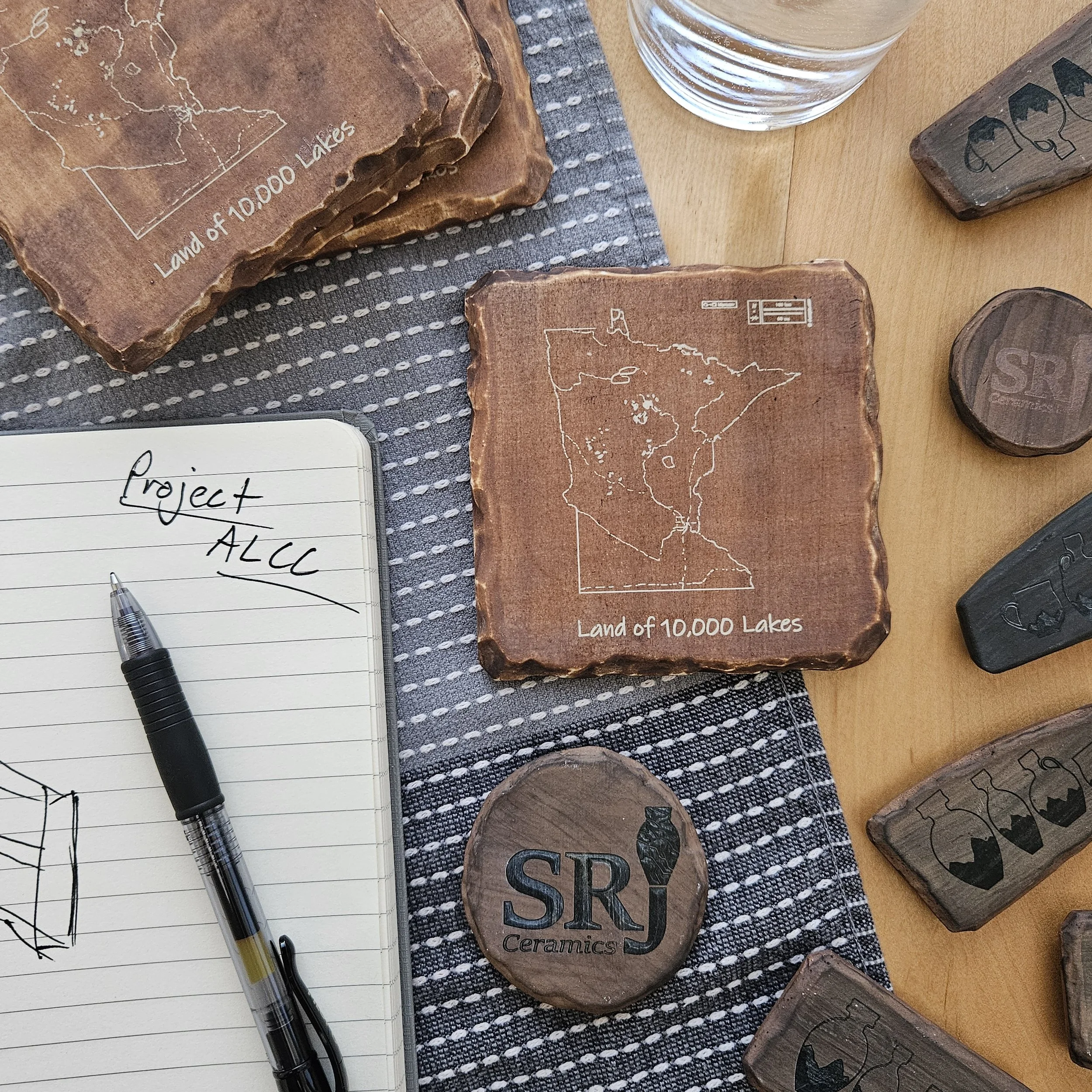
CLAY, DESIGN & LASER IN COLLABORATION
Project ALCC_
Bridging traditional ceramics, digital design, and the laser—one experiment at a time.
THE CONCEPT
How One Idea Became a Two-Year Rabbit Hole
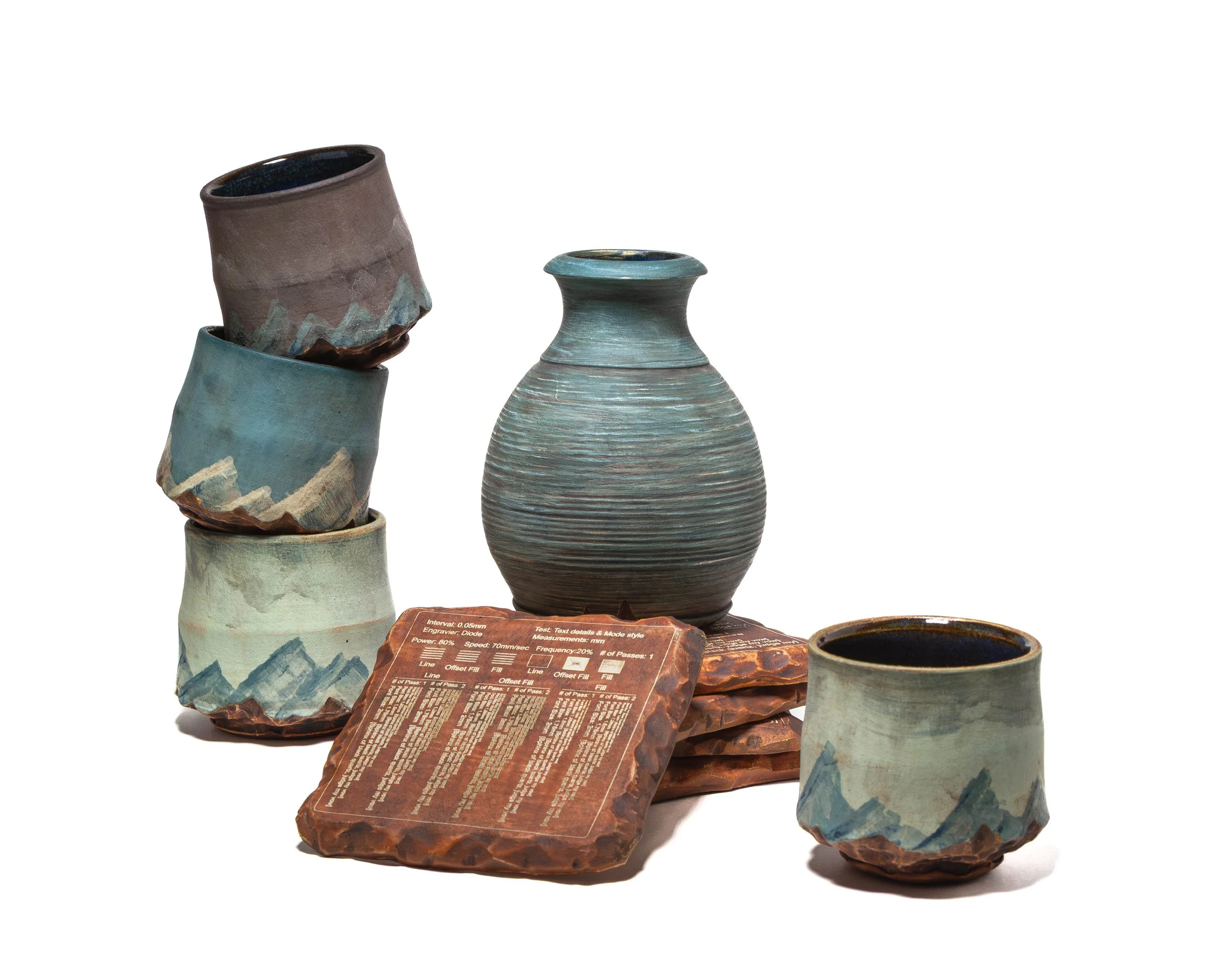
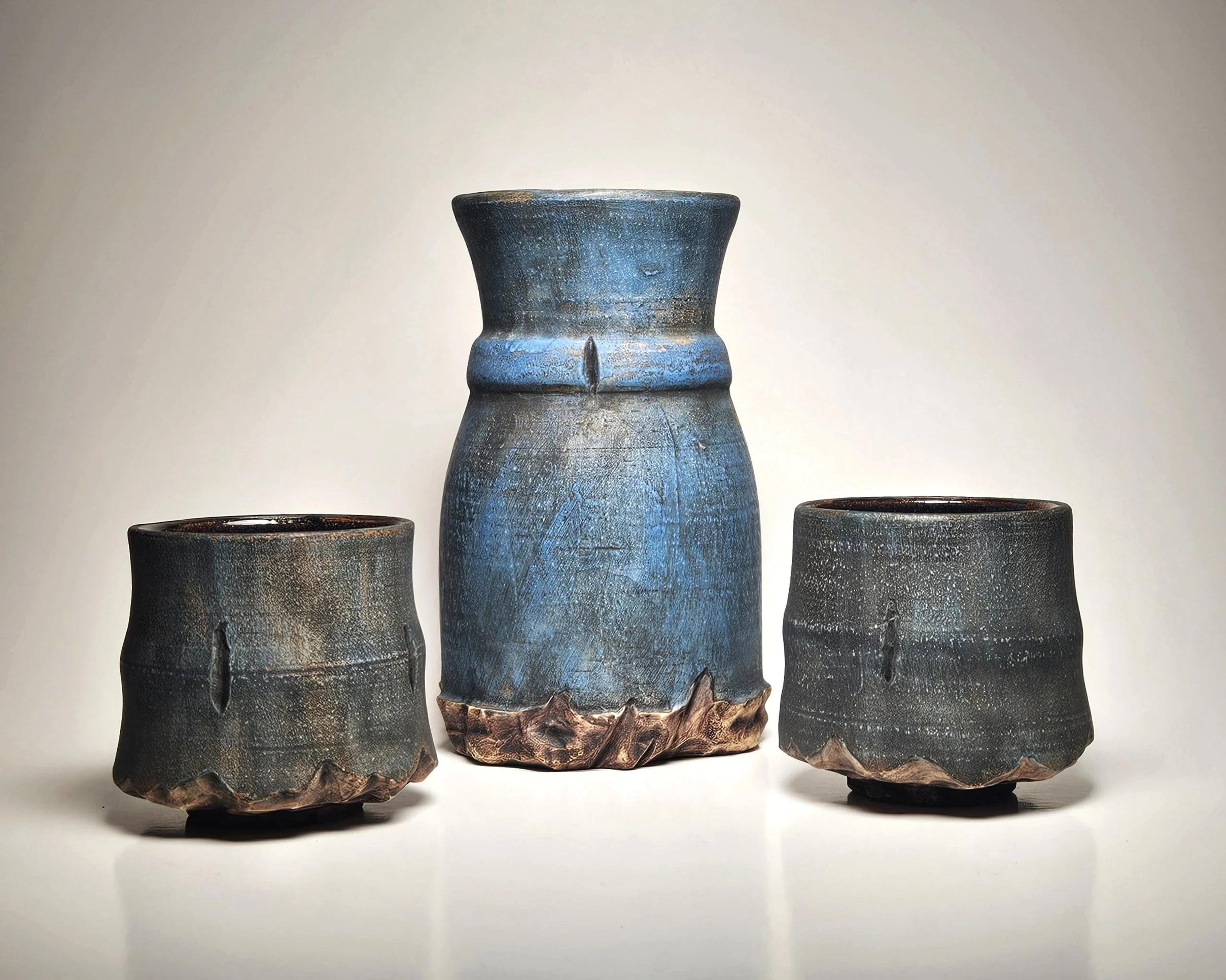
What began as a simple concept test branched into a four-phase research project. Over two years of trial and error went into landing on a repeatable process.
⇒
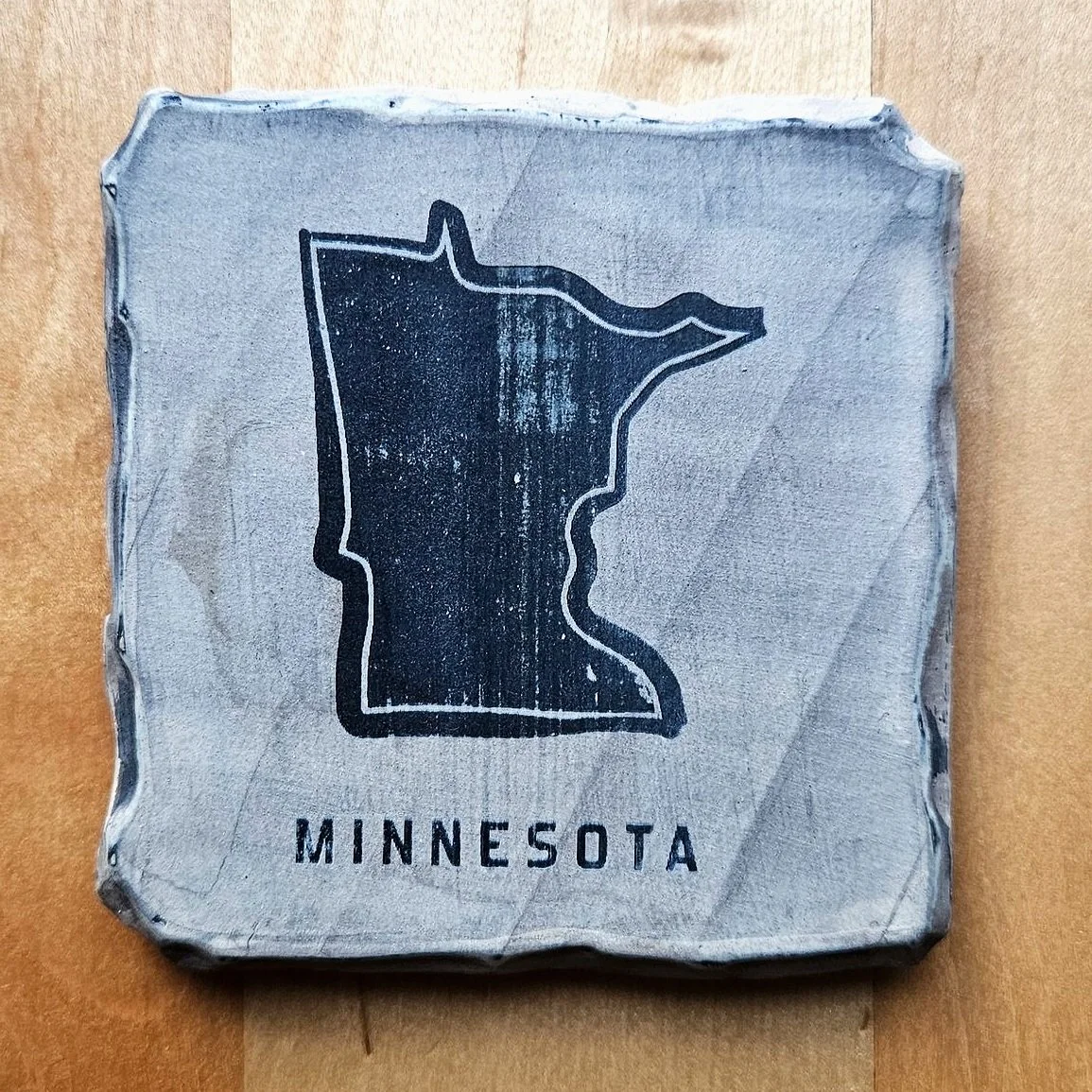
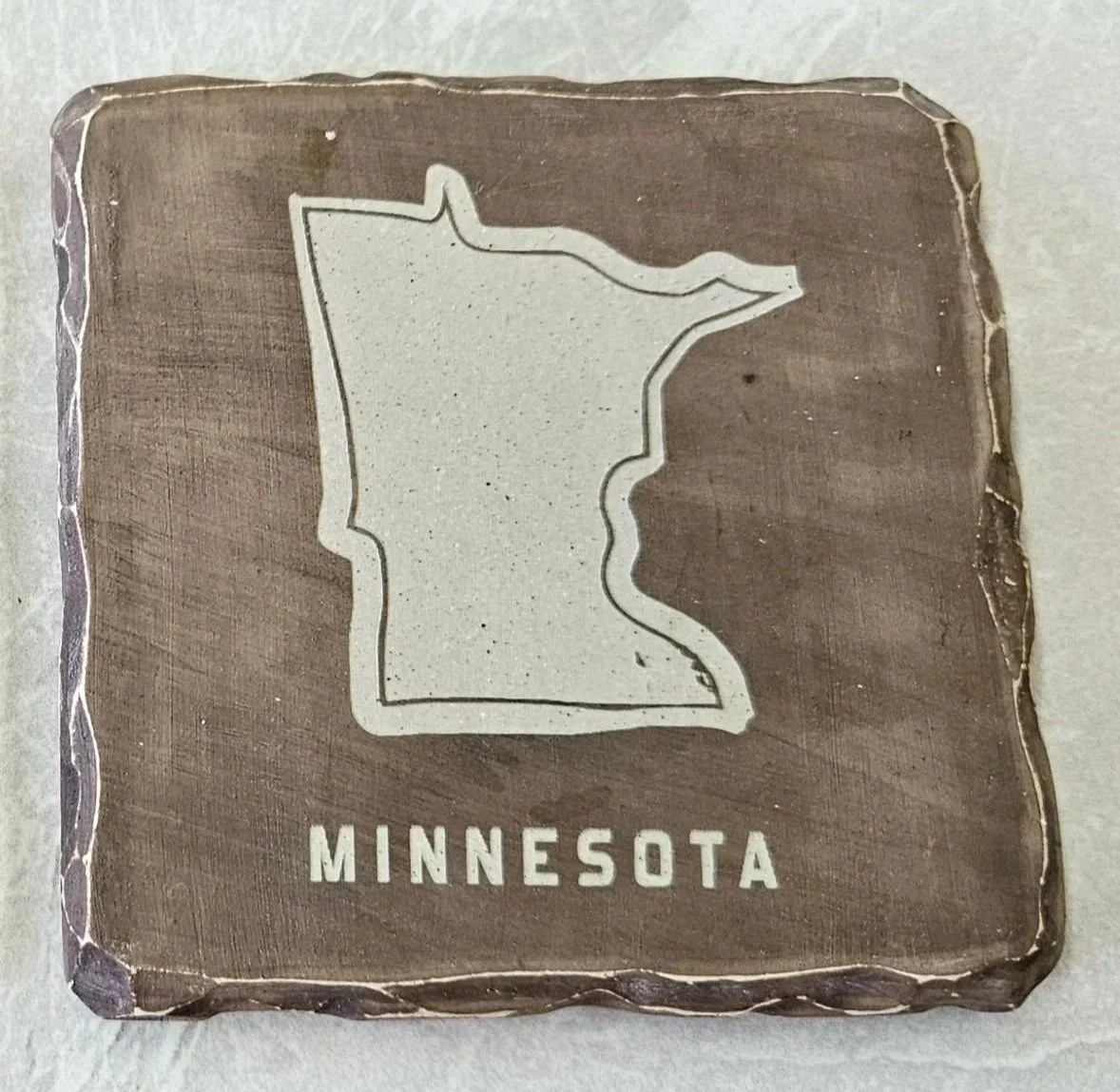
Prototype of Coaster
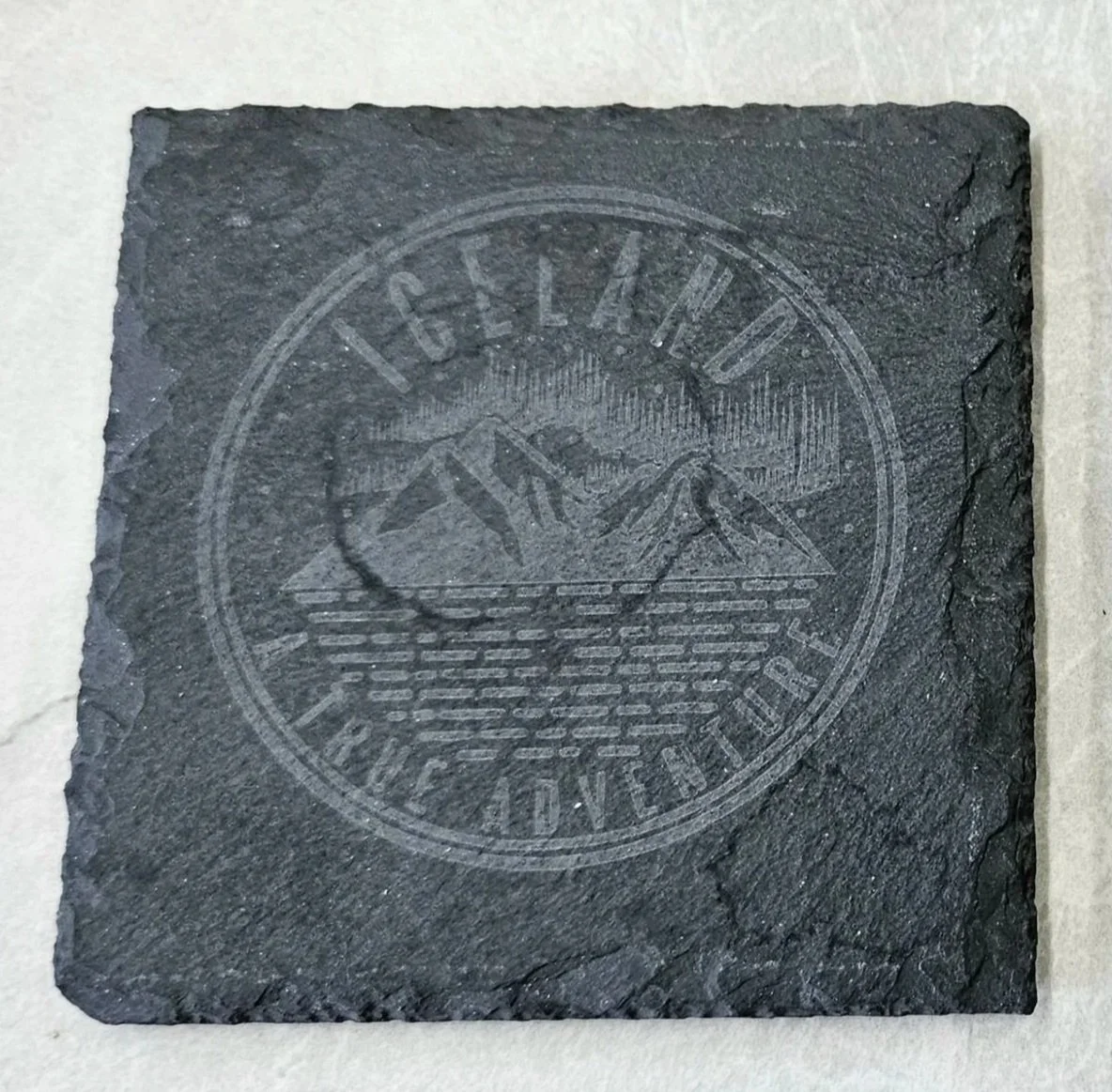
Slate Coaster
1. THE SPARK
A logo-etched slate coaster caught my eye. Its rough carved surface looked a lot like the surface carving I do in my ceramic work.
2. THE QUESTION:
Could a laser engraver recreate those effects, like a stamp or stencil, or make something entirely new?
3. THE BRIDGE:
Finally, a project that pulls both sides of my work together: clay and digital design.
Why Call it Project ALCC_
THE NECESSARY UPGRADE
A More Capable Machine
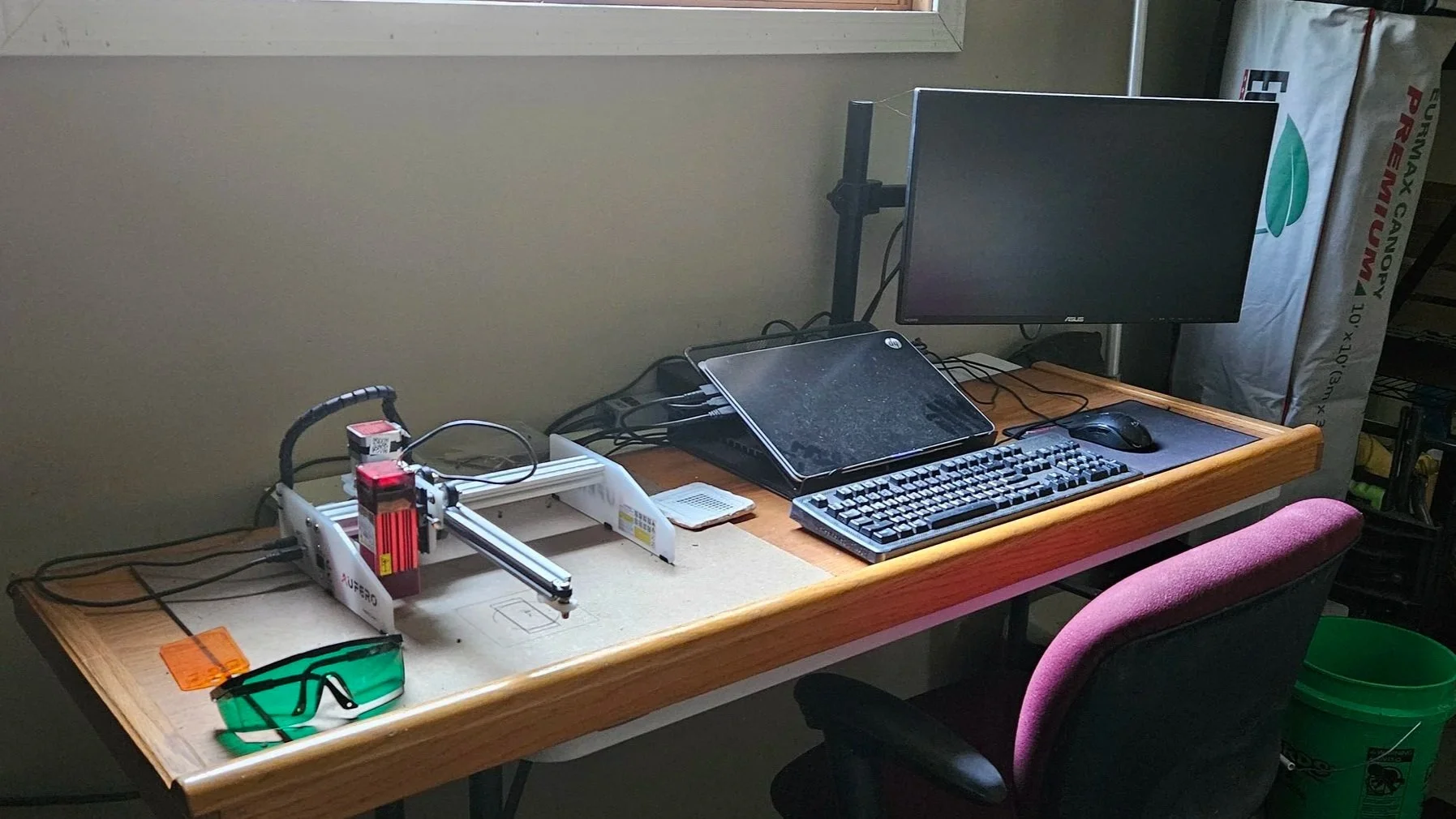
Starting Out
proving the idea
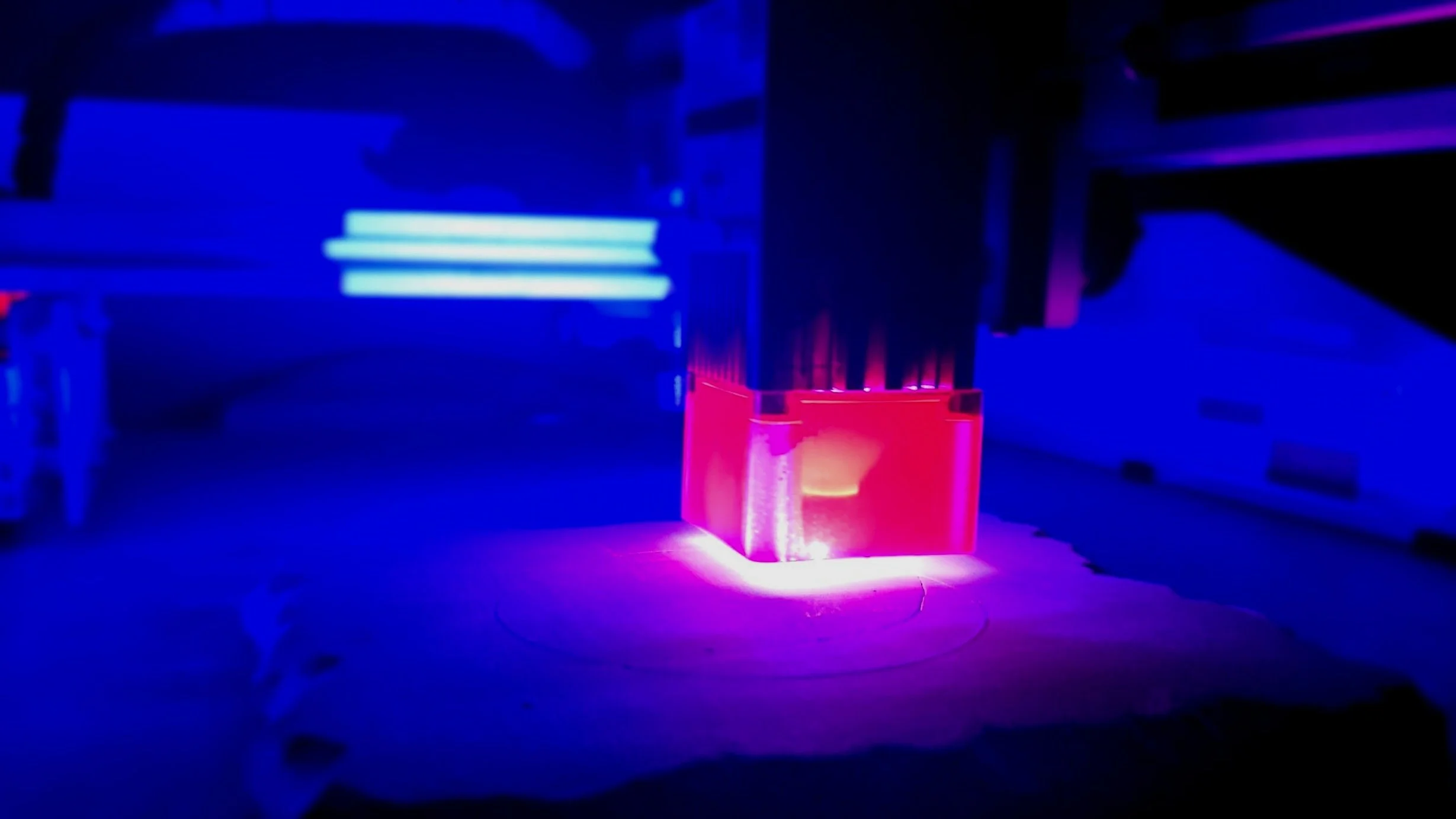
At first, I wasn’t sure what I was doing. I bought an inexpensive laser to test the idea on clay. It’s not very powerful, but the results have been consistent. The biggest challenge is that each test takes one to two hours.
Entry-level diode laser
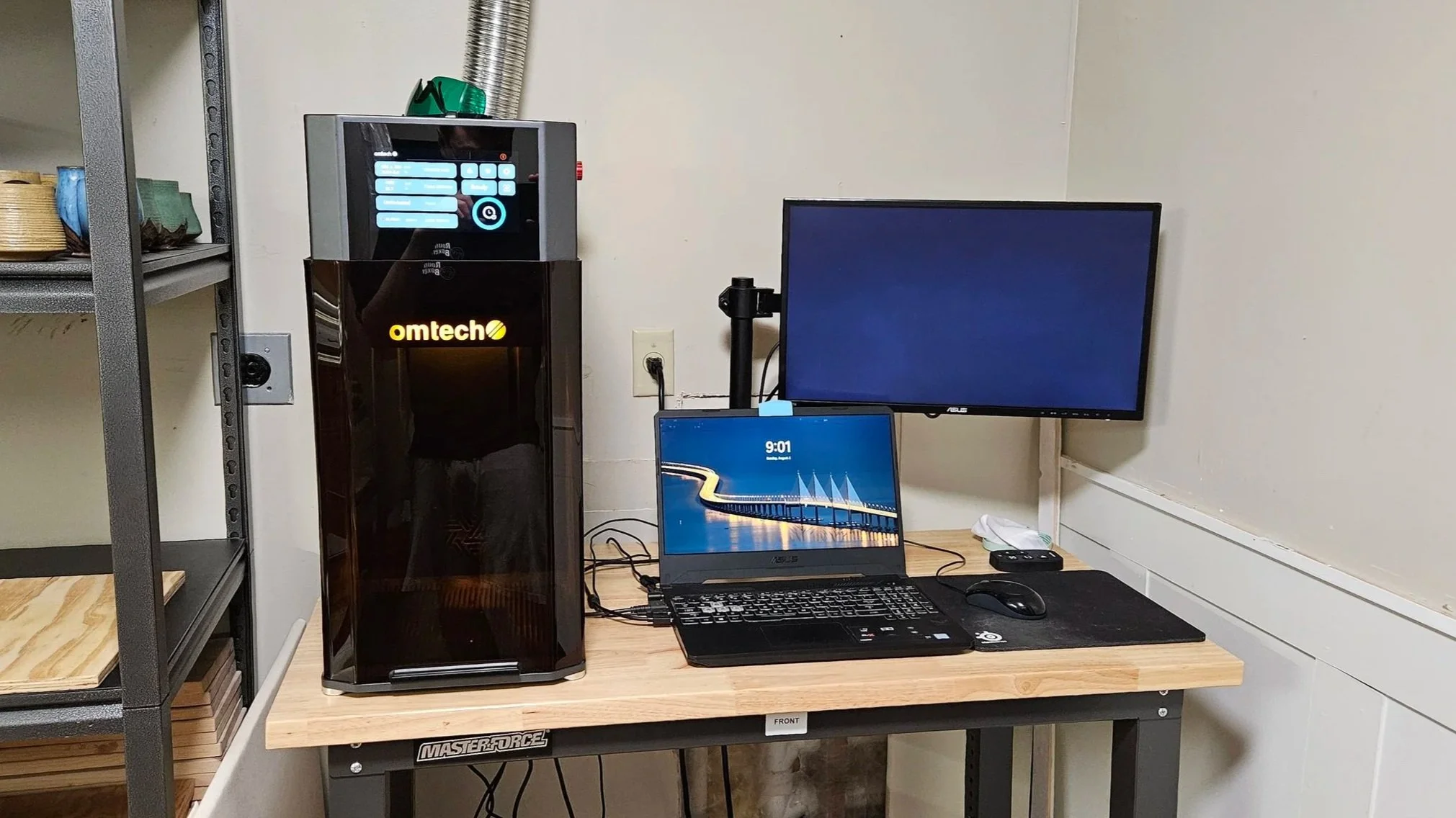
The Upgrade
Room to Explore
With grant funding secured, I upgraded to the OMTech Solis Duo. Its two laser sources, a 30W fiber and a 20W diode, let me explore how each performs on clay and test the ideas behind Project ALCC in full.
OMTech Solis Duo · Fiber & Diode
Project ALCC is made possible by a SEMAC Emerging Artist Grant.
This activity is made possible, in part, by the voters of Minnesota through a Southeastern Minnesota Arts Council (SEMAC) Arts and Cultural Heritage grant, thanks to a legislative appropriation from the arts and cultural heritage fund.
Four phases of trial and error
THE RESEARCH
works, a growing series of experiments, each building on the last. One variable at a time.
Still writing. More articles are on the way.
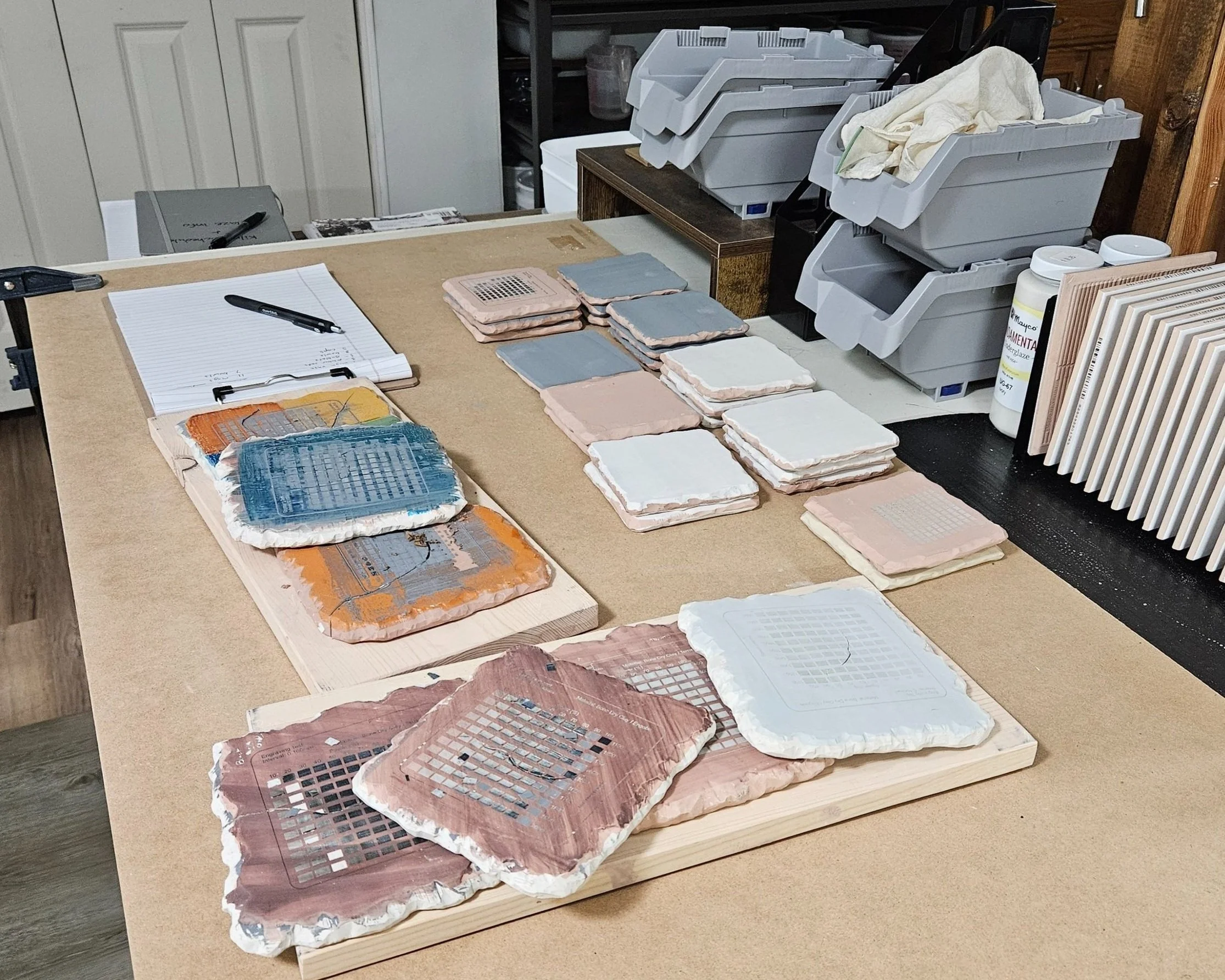
PHASE 0
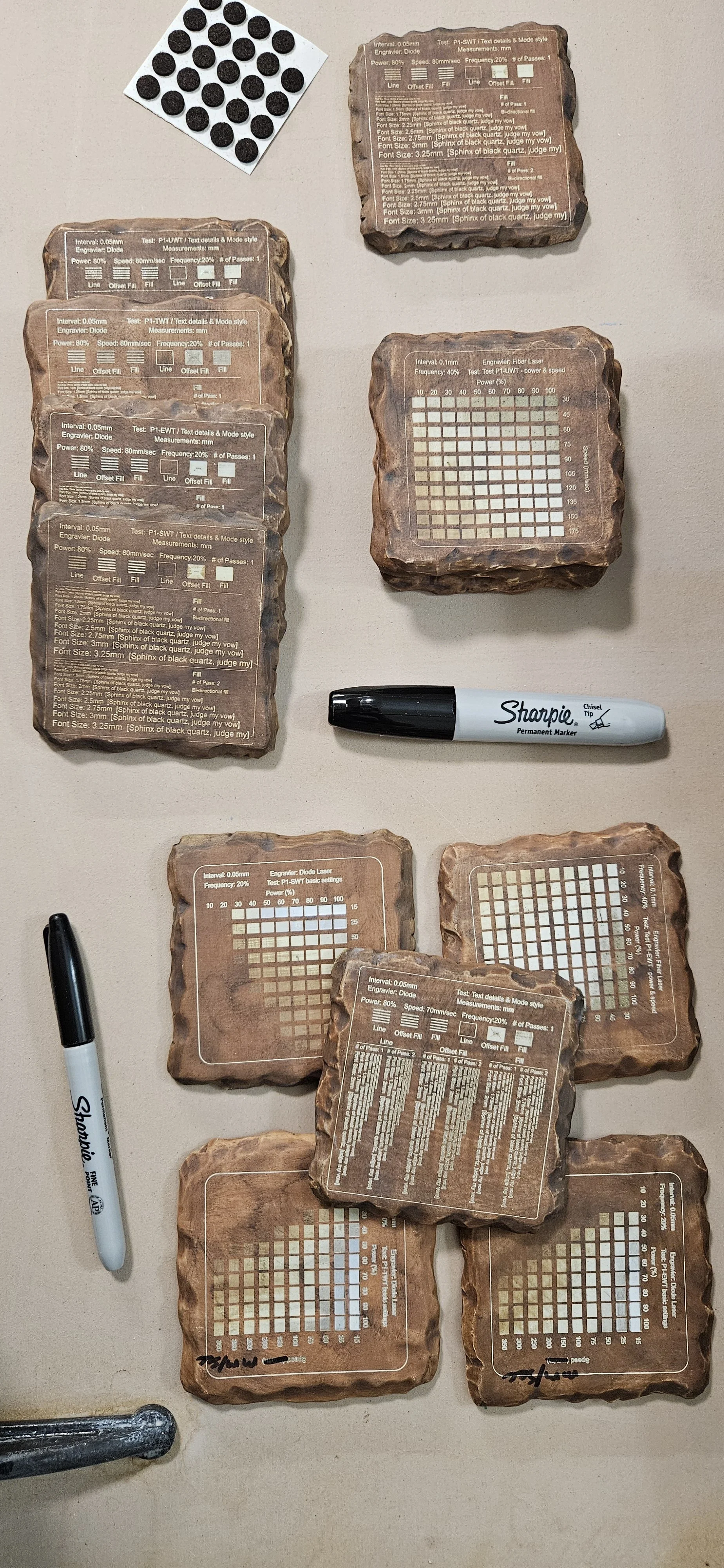
Fine-tuning the laser and confirming its settings and ranges all made sense before the bigger testing process began.
Learn More ⟶
PHASE 1
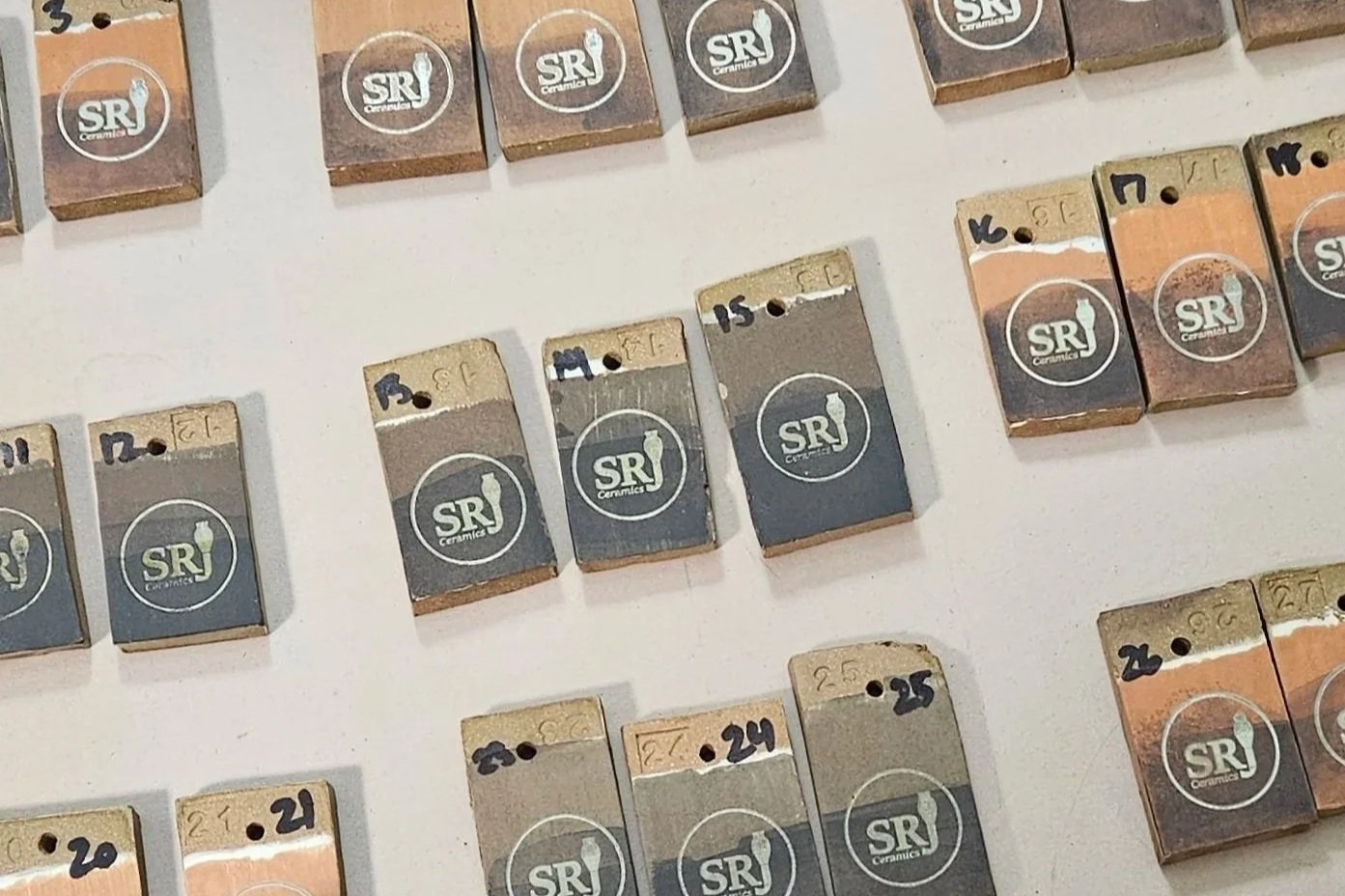
Different surface materials were tested side by side to see which held the crispest detail. The winner became the starting point for everything that followed.
Learn More ⟶
PHASE 2
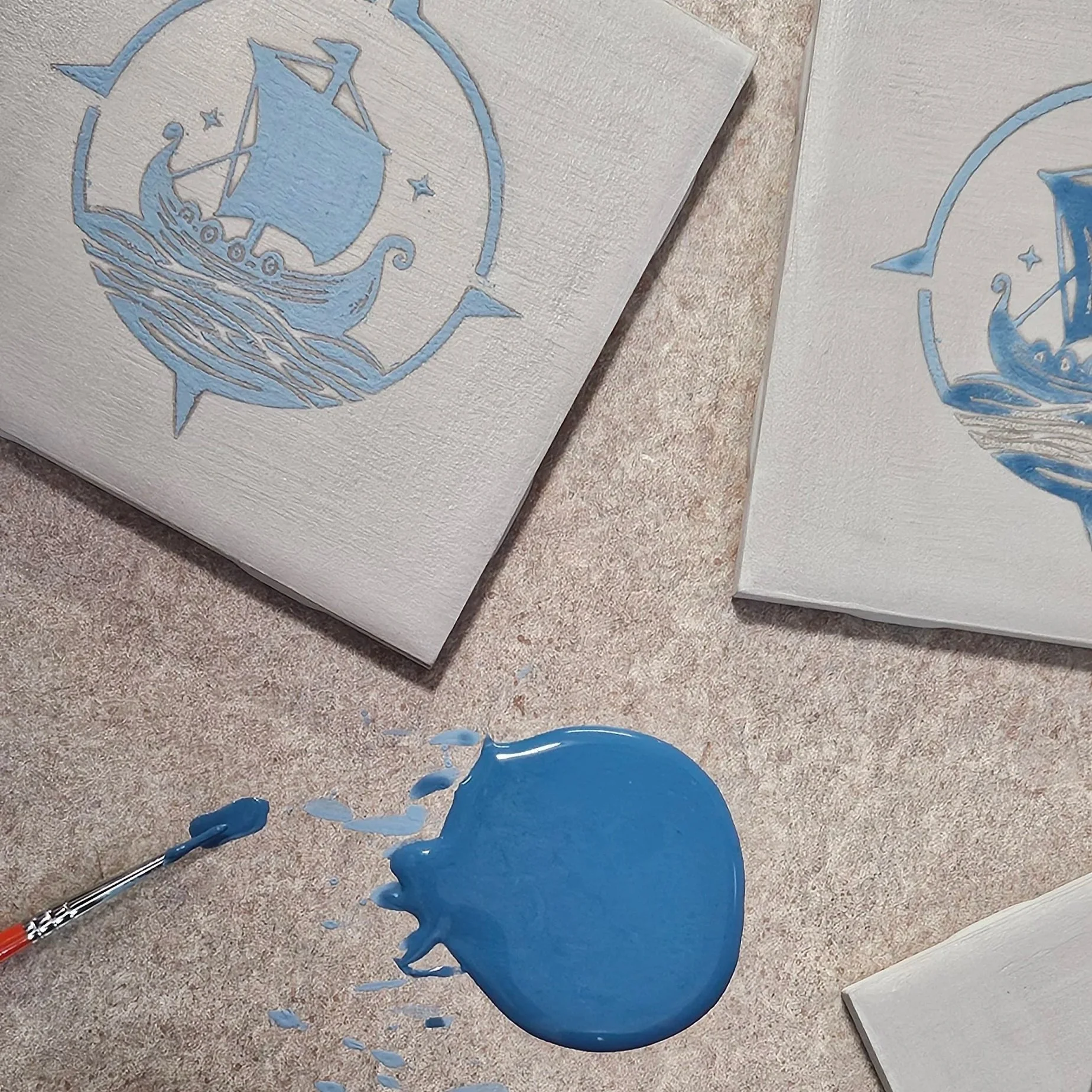
Layering revealed the project's biggest lesson: what makes or breaks a piece isn't the material chosen, but how carefully it's applied.
Learn More ⟶
PHASE 3
The goal was to test whether a laser engraver could melt wax resist onto clay. It took over 100 test tiles to prove it works.
Learn More ⟶
PHASE 4
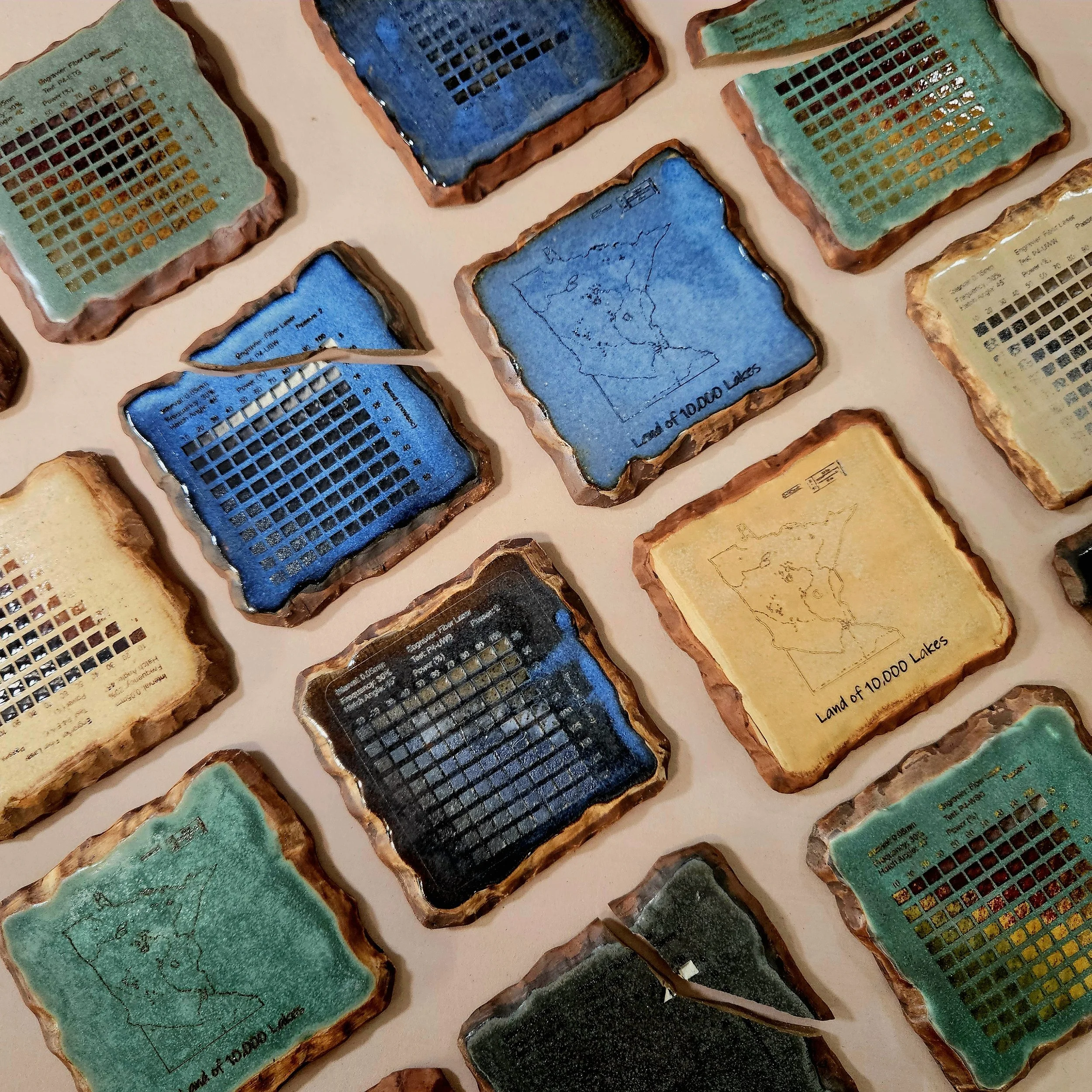
Engraving into already-glazed pieces opened up a whole new surface to work with. Matte glazes proved to hold the detail best.
Learn More ⟶
2,340+
HOURS LOGGED
THE RESULTS
A new direction
Creating new designs and concepts based on insights gathered through Project ALCC.